In North America, the Great Lakes region is known for its commercial fishing industry. Consisting of Lakes Superior, Michigan, Huron, Erie, and Ontario, the Great Lakes are the largest reservoir of freshwater on Earth. The Great Lakes support commercial fisheries in Canada and the USA.
Commercially exploited fish species include lake whitefish, lake herring (cisco), walleye (yellow pike), lake trout, salmon, channel catfish, bullheads, buffalo, carp, sheepshead, quillback, chubs, suckers, white bass, white perch, American eel, and smelt.
Great Lakes Fisheries Management
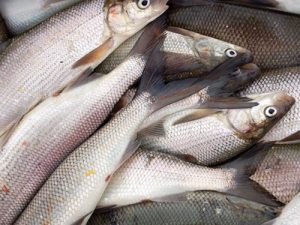
Great Lakes commercial fishing operations are licensed through the U.S states, province of Ontario, and the tribal nations. Each lake has a Native American component of the commercial fishery with the exception of Lake Erie. Great lakes commercial fisheries are managed by quotas, effort controls, and other measures.
Established by the Canadian/U.S. Convention on Great Lakes Fisheries, the Great Lakes Fishery Commission (GLFC) coordinates fisheries research, controls the invasive sea lamprey, and facilitates cooperative fishery management among the state, provincial, tribal, and federal management agencies.
Fish Stocking Programs
Each year, approximately 35 million fish are stocked in the Great Lakes by the Ontario Ministry of Natural Resources, U.S. Fish and Wildlife Service, tribal fisheries departments, and state wildlife agencies.
Great Lakes Fish Pledge
In January 2026, the Great Lakes St. Lawrence Governors & Premiers (GSGP) announced that the region has effectively ended the practice of landfilling fish waste (heads, guts, skin, and scales) generated by the commercial fish industry.
Companies that sign the GSGP 100% Great Lakes Fish Pledge commit to productively using all parts of the fish they handle. Through the Pledge, the region is approaching 100% utilization of each fish caught, raised, or processed in the region.
Related Information